
Mid Canterbury pedal-power project punctured by cost

A district-wide cycle trail looping across Mid Canterbury has been scrapped after a feasibility study found costs and access issues outweighed the potential benefits. Jonathan Leask reports.
The wheels have come off a planned district cycle trail loop.
The estimated $8.6 million cost to complete the trail, along with around $300,000 of annual maintenance and operational costs, forced Ashburton District Council to slam on the brakes.
Ashburton District Council compliance and development group manager Ian Hyde said councillors decided not to go ahead with the project due to the cost.
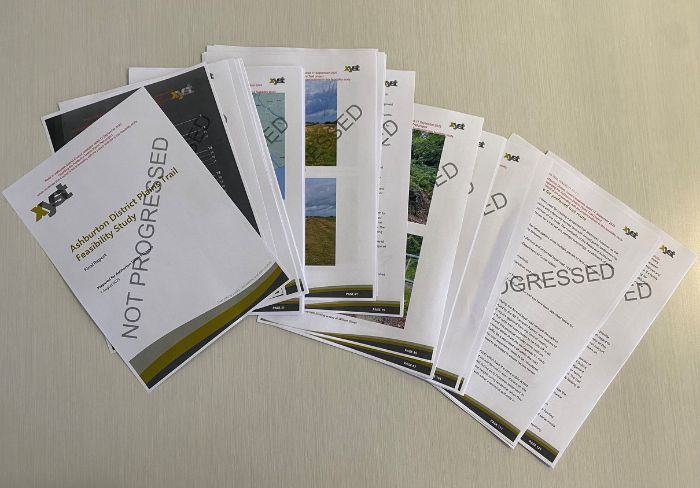
The details of the discussions on September 17 remain publicly excluded, but the Ashburton District Plains Trail Feasibility Study has been released.
Through the long-term plan process in 2024, the council agreed to investigate the feasibility of a cycle trail connecting Rakaia, Methven, Mount Somers and Ashburton, which offered a boost to the local economy.
Hyde had previously stated the study would cost $35,260, more than the $25,000 that had been budgeted, with the additional money coming out of existing budgets.
Recreation consultancy company Xyst were selected early in 2025 to complete the feasibility study.
The study looked at the challenges and risks, along with the benefits it could bring to the district.
Its goal was to determine if a plains trail was viable.
Beyond funding the study, there was no money budgeted in the 2024-34 long-term plan for any further trail development.
The cost
The study estimated the price tag for establishing the trail at $8.6 million.
Xyst also estimated the annual trail maintenance to be around $50,000 per year for each trail section – a total of $150,000 per year.
On top of that would be the engineer’s inspection of structures, contingency funds for natural hazard damage, depreciation of assets, trail manager costs, and a trail resurfacing cost every 10-years.
“The annual cost for the trail, if all three sections were completed, would be $300,000 in its first year of operation and rising with inflation beyond that.”
There were also landowner access challenges, and the need for detailed community and stakeholder buy-in.
The study suggested taking the trail proposal into the next long-term plan to gauge whether the wider community was supportive through consultation.
The council’s decision was not to proceed at all.
The U-Shaped Route
Consultants Xyst drew on on-ground and desktop investigations, local trail advocates’ knowledge, and earlier work by the Braided Waters Cycle Trust to map a preferred route.
The Trust, formed in 2010 with an $80,000 council grant, had planned a 150km trail linking Rakaia, the Highbank power station, Methven, Mt Somers and Lake Hood – a series of day trips between townships.
Progress stalled after the Canterbury earthquakes, and the Trust wound up in 2021, gifting its remaining $102,443 to the council for local bike trail grants.
Xyst began with the council’s vision for a full loop but ruled out a coastal link between Ashburton and Rakaia as it was "impractical”, the report said.
Instead, Xyst proposed three trail sections: Upper Rakaia (Rakaia–Highbank, $2.6m), Foothills (Highbank–Mt Somers, $3.4m) and Upper Ashburton (Mt Somers–Ashburton, $2.6m).
They also recommended developing the trail in stages—starting with the Foothills section, then Upper Ashburton, and finishing with Upper Rakaia.
“Research has shown that daytrips or shorter rides are the greatest proportion of cycle trail use, and each of these trail sections could be used as stand-alone daytrips.
Staging would also give an opportunity to gauge the success of the trail, including user satisfaction, spending increases in businesses, and local support.
Stakeholders supportive but…
The study did not consult private landowners, noting this would be a “significant and critical area of work” in any next phase.
It did engage key agencies.
Environment Canterbury said stopbanks sit on private land, and any trail use must avoid altering their structural integrity.
The Department of Conservation supported the concept but was “stymied by restrictive policy on cycle use and trail development on public conservation land in Canterbury”, saying the project would require a review of the Canterbury Conservation Management Strategy.
Arowhenua Rūnanga, via Aoraki Environmental Consulting, raised no specific concerns but noted the route passed areas with archaeological sites, recommending the council work with Heritage New Zealand Pouhere Taonga to protect them.
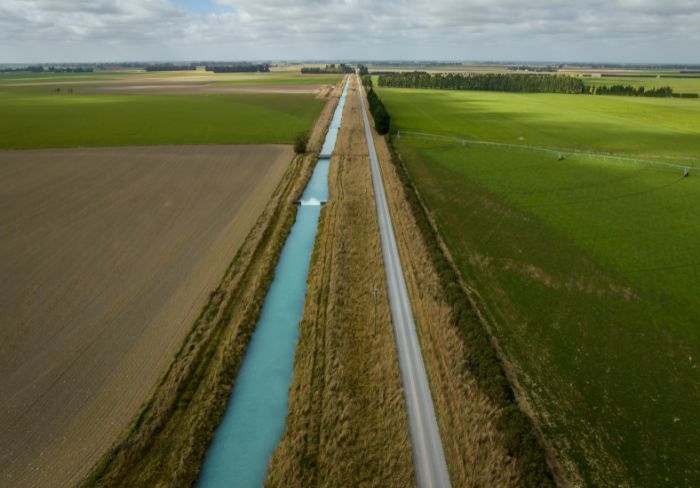
Rangitata Diversion Race Management supported the proposal in principle, as it already allows access for the Methven Walkway, but said further access “would need to be worked through”.
Community disappointed, but not surprised
Rakaia Residents Association chairperson Neil Pluck, who had been on the Braided Waters Cycle Trust, understood the decision “especially in economic times like this”.
The Rakaia community has its own walking and biking trail, but still supports a district-wide trail.
“Our community was first out of the starting block 20-odd years ago, and our vision was always to be part of a district-wide trail, with Rakaia as the beginning or end of the loop.
“We still see it like that, and it would be fantastic if it exists, but I acknowledge there is a lot of work to do.”
The council has “done the right thing and the decision is fair” but he believes it can still progress.
“It’s not a case of if but when, and the people of Mid Canterbury, we can do this. A lot of other districts have and we can too."
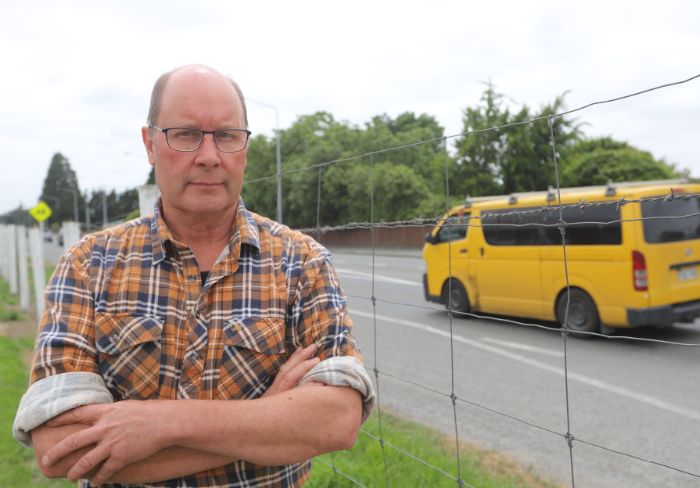
Kirstie Gilchrist, the owner of Big Als Methven, engaged in the feasibility study.
“We knew it wouldn’t progress because of the cost and the access issues.”
Ashburton Mountain Bike Club Dean Harrison said the decision was a little disappointing given the development of similar trails elsewhere in the country attracting tourists.
“It’s probably warranted given the cost to the council, but I still see the benefits.”
“The decision not to proceed won’t impact us that much, being a mountain bike club and the trail they were looking to build is for a different demographic.”
Where to from here?
Any further progress on the district-wide cycle trail by the council has been stopped dead in its tracks.
It’s the second time the project has been started but not followed through with.
That doesn’t prohibit the existing trails, community groups, or a private company from picking up where the council left off.
By Jonathan Leask