Credit where it's due

It started small. Almost nothing, really.
A handful of local businessmen, a ledger book, and an idea that felt simple at the time. Help people get into homes, back your neighbours and keep it local.
That was Ashburton in 1875. No computers. No branches. No branding. Just people sitting around a table trying to make something work.
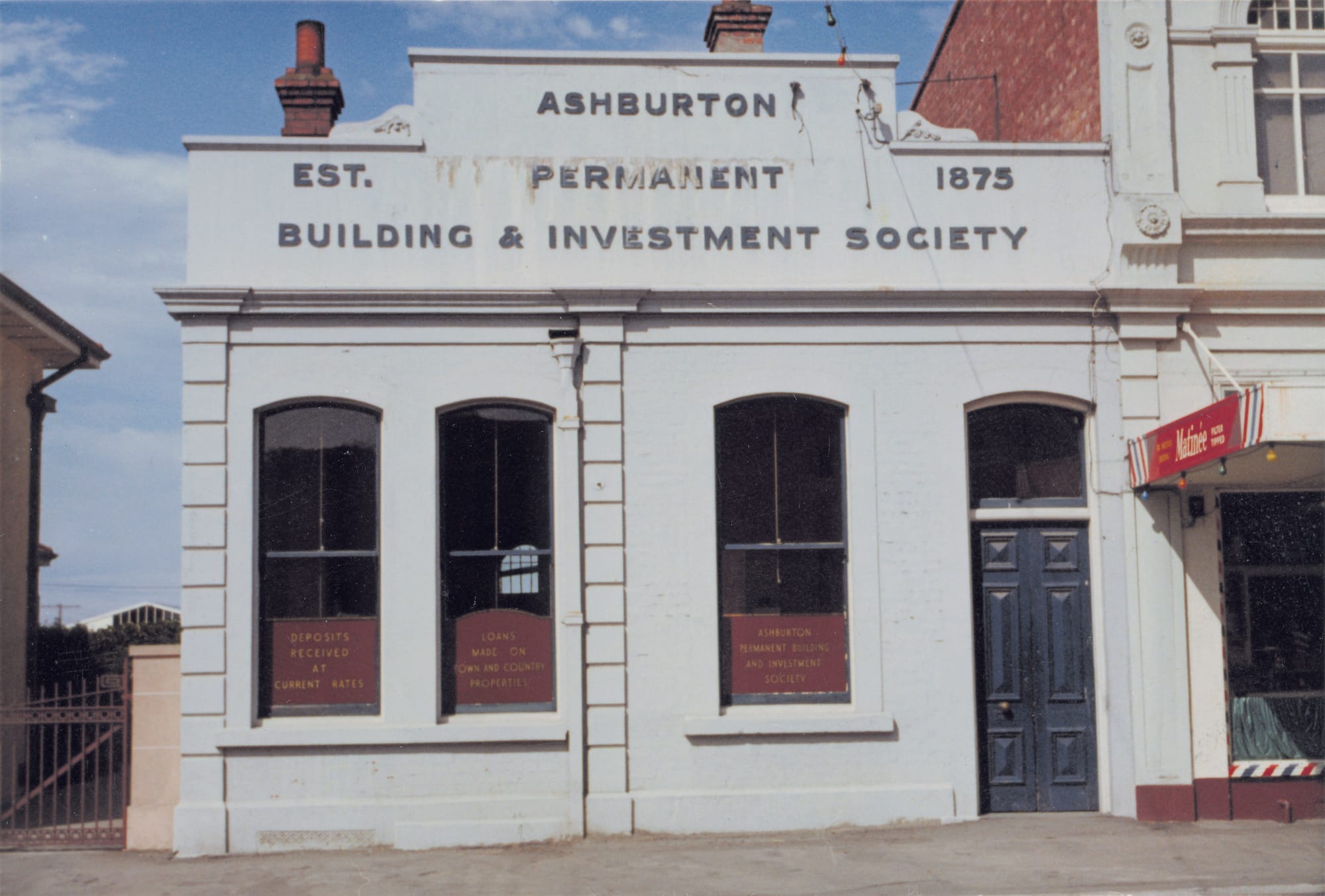
They called it the Ashburton Permanent Building and Investment Society, which George Coleman chaired, and in that first year they lent out $466 in mortgages. Not millions, not even thousands but just enough to get a few families started, when a new house back then cost about $600.
You try and picture that now. Dust on the streets, horses tied up outside. People walking in, hats in hand, asking for a chance. Not a product. Not a package. Just a chance, and it stuck.
Years rolled on and the rules were tight. If a director turned up late to a meeting without warning, they’d get fined two shillings and sixpence. You can almost hear the conversations and the formality of it all, but with the sense that this really mattered.
They built their first proper office on Tancred Street in 1892. A real place now, somewhere people could walk into and feel like something solid was behind it.
But even then, it was still Ashburton. Still just locals helping locals.
But, like most things that last, it started to change because other groups were forming.
In Christchurch, the Sydenham and Suburban Co-operative Money Club opened its doors in the early 1900s. Different name, different city, but the same idea underneath, with people pooling money and helping each other get ahead.
For decades, those organisations ran alongside each other. Separate. Local. Focused, but then the edges started to blur.
By the early 2000s, the Ashburton Building Society, trading as ABS Canterbury, was no longer just a standalone local operation. In 2006, it merged with the SMC Building Society, two businesses with two long histories brought together to become CBS Canterbury.
Not long after, in 2008 when the Global Financial Crisis resulted in the collapse of many businesses, another piece came in when the Ashburton Loan and Building Society merged into the Canterbury Building Society.
Another layer added, another thread tied in, and you can imagine what that must have looked like from the outside. New signage, systems and people adjusting. Staff learning different ways of doing things, customers wondering what it meant for them.
But underneath it all, it was still trying to do the same thing as it always had, to stay relevant and strong enough to keep helping. And then came 2011, the big one.
CBS Canterbury joined forces with Southern Cross Building Society and Marac Finance to become the Heartland Building Society, listed on the New Zealand Stock Exchange.
Heartland then acquired PGG Wrightson Finance, which provided services to rural and farming customers, and suddenly it was in a position to apply for a full banking, licence. And that’s where the shift really happened because from a cluster of regional building societies and finance companies it had morphed into something that could now operate at a national level.
A year later, Heartland took another step, becoming a registered bank, the country’s 22nd, and one of the few still New Zealand-owned and run. But from there, it didn’t stop.
It moved into reverse mortgages. Picked up lending books and kept growing, but in its own way by not trying to be everything, just focusing on the parts it understood.
And in April 2024, Heartland Bank Limited acquired Australia’s Challenger Bank to become the first New Zealand bank to purchase an Australian bank.
And now, with Heartland Bank proposing to merge with TSB, it’s on the cusp of another step again. It’s one that would see it become New Zealand’s seventh biggest bank and an even stronger homegrown challenger with roots still firmly in the regions.
So, 150 years on, you stand back and try to take it all in.
From $466 in mortgages in 1875, to a bank operating across New Zealand and Australia. From handwritten fines for directors being late to board meetings, to listings, acquisitions, and digital systems.
It’s come a long way and there’s been massive change, but if you strip it right back the original idea hasn’t really changed.
It’s still about backing people. It’s still about helping someone get a start or a second chance. And that’s the thread that’s run through it all - quietly and consistently – from every name change, merger and shift in how banking’s done.
And maybe that’s the part that matters most. Not the scale of it now. Not even the reach, but that it started here. In Ashburton. By our people.
Somehow, through everything that’s changed and evolved, we’ve never really lost that touch and connection, which probably matters more than anything else.
By Daryl Holden