
Wheel of time: Heritage restored at Lincoln's historic mill site

The legacy of one of Canterbury's largest flour mills has been restored, where a $473,000 redevelopment has transformed the historic mill site into a community heritage destination.
Lincoln is home to one of the largest flour mills in Canterbury, owned by pioneer flour miller Henry Moffat.
Moffat’s Mill operated between 1867 and 1921, and was powered by a large water wheel in Ryelands Weir in the Liffey Stream.
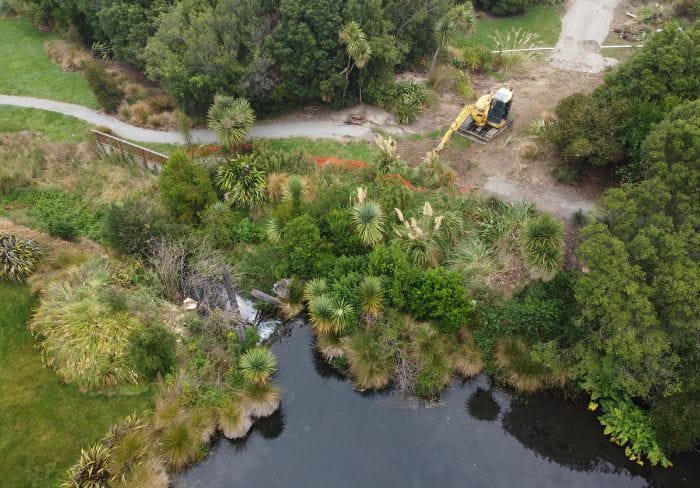
The Selwyn District Council and its contractor CORDE have been working with the Lincoln and District Historical Society (Inc) and Lincoln Rotary to tidy and upgrade the rundown site where the weir is located and turn it into a beautiful spot for the community to visit and learn about Lincoln’s past.
A replica waterwheel, created by the Rotary club, has been installed.
Next to the replica wheel sits the original millstones, used to grind the grains at the mill, which were previously on display outside the Lincoln Library.
Springs Ward Councillor Denise Carrick said the project means a lot to the community.
“It’s the reason Lincoln is here, so it's great to highlight the history of the town.
“It’s a project that has been worked on for a long time, so it's great to see it come together, and bring together council with rotary and historic association.”
The reserve area has been tidied up to allow better public access and the timber pilings from the original weir have been reused in the site upgrade.
The old broken weir has been replaced with a new one, using 140 tonnes of Rakaia River stone and a new fish passage to better protect the fish life in the Liffey Stream.
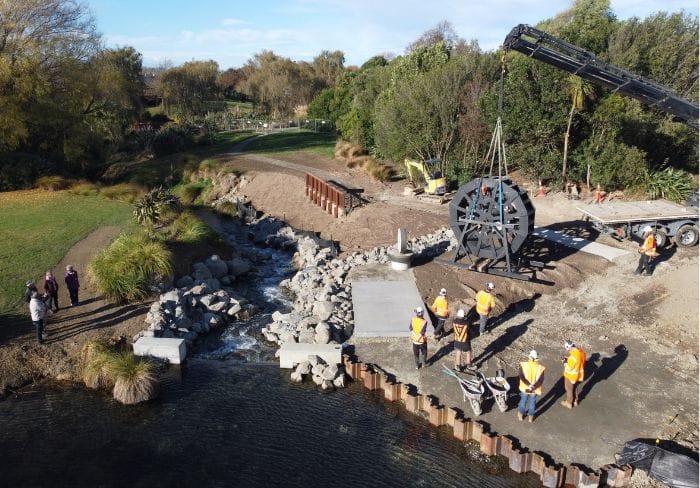
The work also included fixing the eroding stream banks and native planting.
Springs Ward Councillor Aaron McGlinchy was pleased to see the “old collapsing weir replaced and the bank stabilised”.
“Hopefully the walk to the water wheel becomes something locals and visitors will enjoy.”
The project, which started in March, cost $473,000, including the consents.
The council and the historical society have been hunting for anyone who may have old photos of Moffat’s Mill, as they do not have one in their collections.
By Jonathan Leask