
Banking on bold decisions

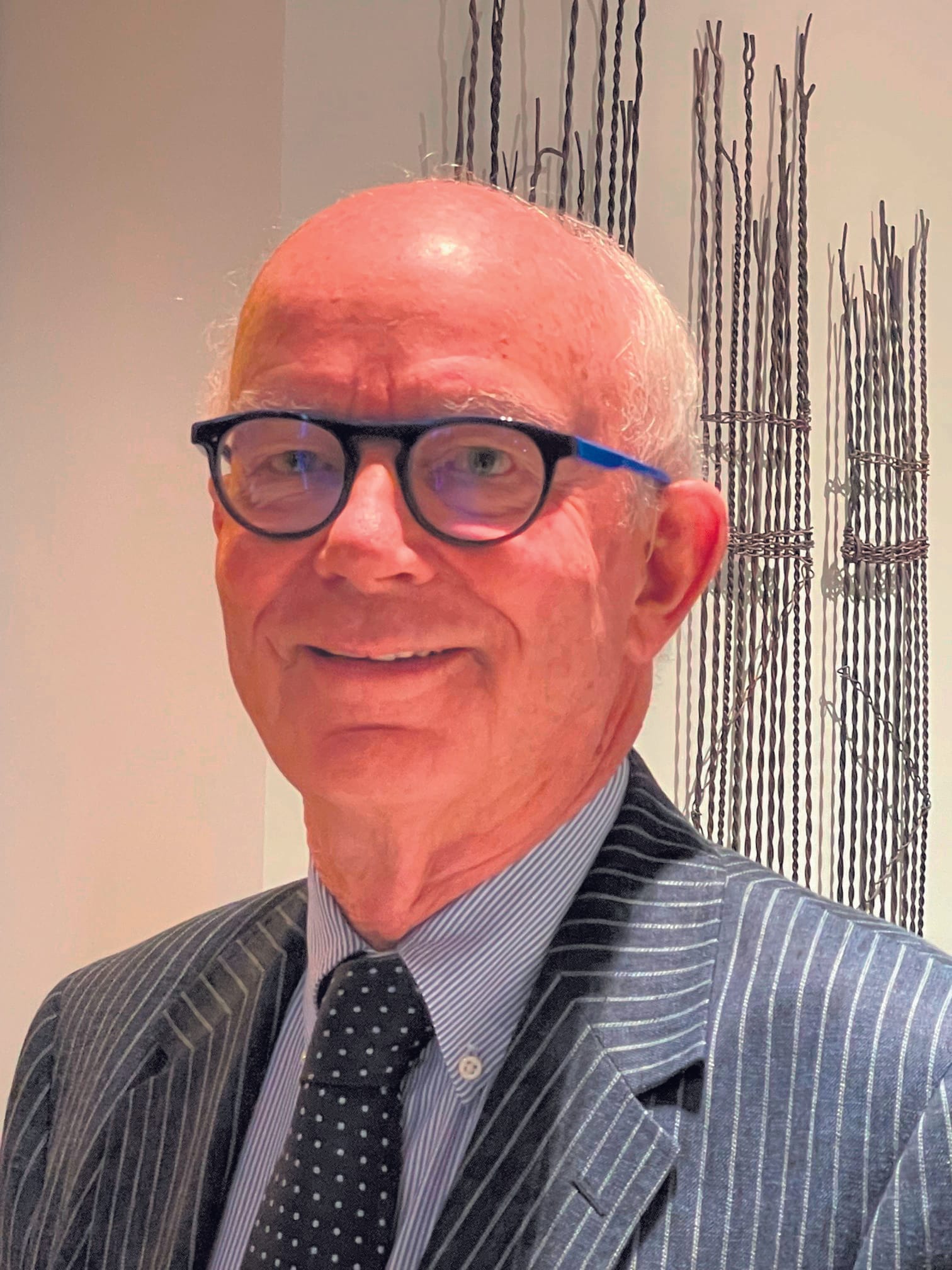
Some people wait for luck, but Graham Kennedy has always seen it differently.
After four decades tied to what we all now know as Heartland Bank, the acclaimed Ashburton independent professional director and business leader, has a clearer view than most how a 150-year-old institution survives. Not by chance, he’ll tell you, but by moving when it has to.
Kennedy did just that, joining the Ashburton Permanent Building Society board in 1985, stepping into an organisation that was already more than a century old, but which still operated much as it always had. Local money, local decisions, and a pace that reflected both.
It was personal and deliberate, finance with faces, the sort of place where a loan wasn’t just a number on a sheet.
“If you go back to the origin, it was local people for local businesses lending to local families to buy houses,” said Kennedy, who became a founding director of Heartland Bank in 2011 and who was recognised in the 2017 Queen's Birthday Honours for services to business.
“When I joined the board, there were 12 and a half million dollars of assets that had taken 110 years to accumulate.
“And, apparently, there had not been a mortgagee sale in that time because people were lending to people.”
That tells you plenty about the pace of the place, but even more about the culture and how decisions were made. Loans were approved monthly by the board in those early days, with at least one director even driving past a property to make sure it actually existed.
Why? Well, Ashburton was not a market to be worked over. It was home. Customers were not distant names. They were neighbours, businesspeople, families, and often people you would see again.
Kennedy knew that in a tight-knit community like Ashburton - where everyone literally did know everyone - that reputation wasn’t something you managed. It was something you carried.
“One thing you learn in a small community, no matter what deal you’re doing, is that a week later you’ll be on the other side and so you have to make sure that you play with a straight bat at all times.
“You’re upfront and honest and operate with integrity. That’s absolutely paramount.”
While that model had worked for more than a century, the ground beneath it was shifting. Deregulation opened the door to major banks to move into residential lending, which left building societies across New Zealand under pressure, and many didn’t survive.
“All those building societies, one by one, either got swallowed up or downsized or just disappeared because they couldn’t compete with banks anymore.”
The Ashburton society faced the same reality. Stay as it was, or change, and what followed was a long, often complex process of mergers and restructuring, building the scale needed to compete in a different financial landscape. Kennedy was part of that shift, as the organisation moved steadily away from its original structure.
“There were actually seven mergers that took place through until 2011 when Heartland was formed.”
The goal was clear, to become a bank, but getting there proved harder than expected.
“Originally, we thought if we got to total assets of $250 million, we would be able to get a banking licence.
“But every time we got to that target, the bar got raised.”
Pressure intensified during the 2008 global financial crisis when the limitations of the building society model and the rules they operated under became clear.
Kennedy said it was a “nerve-wracking time” because they were governed by a trust deed ratio, rules designed to ensure it always had enough money in reserve. The problem was that even the smallest breach of that trust deed had to be disclosed depositors.
“So, if you breach a ratio even by $10, you have to send a letter out to all your depositors saying you had just breached the ratio.”
In uncertain economic times, and in a jittery market, even a minor breach could trigger panic, with customers rushing to withdraw their savings. But a banking licence offered a different framework. Not less discipline, but more ability to manage risk and respond.
Of course, there were doubters. Not so much fierce opposition, Kennedy says, but plenty who didn’t think the transition to become a bank would work. Even earlier expansion moves beyond Ashburton tested local comfort levels.
Christchurch seemed bold enough. Auckland sounded, to some, like another world altogether.
“Ashburton was pretty parochial those days,” he said.
“In fact, when we decided to go to Christchurch and buy a branch, there was quite a lot of push-back because they thought going to Christchurch was a bit risky.
“But then when I said we were going to Auckland, I got these calls saying, ‘you’re absolutely mad, you’ll have to count your fingers when you come back’.”
Those doubts are easier to smile about now because Heartland did become a bank, grew into specialist areas, moved into reverse mortgages, and expanded across the Tasman.
It would eventually become the first New Zealand bank to own an Australian bank; a milestone Kennedy sees as proof that size doesn’t have to limit ambition.
For him, though, the most satisfying part was not simply that Heartland grew. It was more about that the Ashburton thread wasn’t lost in the process.
“As an organisation, Heartland Bank have always admired the culture of loyalty and support that we have had in Ashburton for both customers and staff, and they have continued to replicate that as much as they can, even though the business has expanded.”
Kennedy’s since retired as a director of the bank, but remains involved through Heartland’s charitable trust, which distributes about $400,000 a year to community causes.
It’s a different kind of return, but one that still reflects where the organisation started.
And looking back, the scale of change is obvious. What began as a small, community-based lender is now a banking group operating across country borders.
But Kennedy remains characteristically grounded about how it happened. Success, he says, isn't about waiting for opportunity to arrive. It's about getting out there and creating it, which is what he and his Heartland Bank pioneers certainly did.
“Some people say you’re lucky and there is an element of luck,” Kennedy explains.
“But you find the luck. People that make things happen somehow find luck.”